Office Clearance Mitcham — Health & Safety Policy
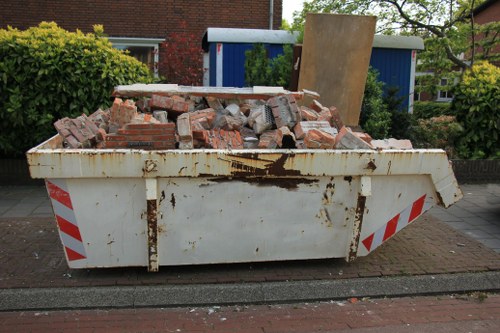 Purpose: This policy sets out the health and safety principles and procedures that govern our office clearance operations in Mitcham and nearby service areas. It relates to all removal, waste handling, and rubbish clearance activities carried out by our staff, contractors and subcontractors. The aim is to protect employees, clients, visitors and the public from harm while maintaining compliant and efficient commercial clearance and waste removal practices.
Scope: This policy applies to every stage of an office clearance, including initial site assessment, segregation of materials, safe handling of bulky items, hazardous waste identification, transportation and final disposal or recycling. It covers office clearance services, workplace rubbish removal, and on-site waste sorting operations that take place in offices, commercial properties and shared workspaces.
 Responsibilities: Management must ensure adequate resources, training and supervision are provided. Staff are required to follow safe systems of work, report hazards promptly and use personal protective equipment (PPE). Contractors engaged for specific tasks must comply with this health and safety policy and demonstrate safe working practices. Key responsibilities include:
- Risk assessments: Conduct and document risk assessments prior to every clearance exercise, identifying manual handling risks, trip/fall hazards, electrical risks and potential asbestos or chemical contamination.
- Training and competence: Provide induction, manual handling training and task-specific training for operating mechanical aids and vehicles when applicable.
- Personal protective equipment: Supply gloves, high-visibility clothing, safety boots and eye protection as required by the task.
Safe work procedures: Our standard operating procedures prioritise ergonomics and teamwork to reduce musculoskeletal injury during lifting and carrying. Use of trolleys, sack trucks and lifting straps is mandatory for heavy or awkward loads. Work areas must be kept tidy to reduce slip and trip hazards; any spillage or loose materials must be cleared immediately.
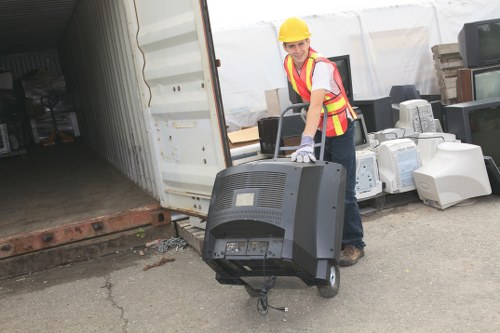
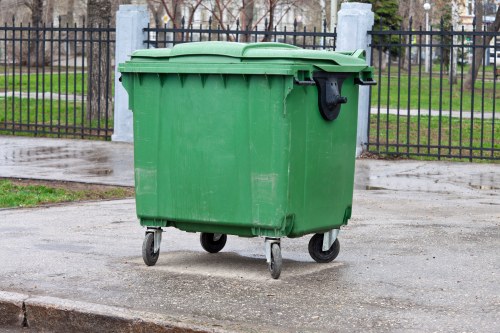 Hazardous materials and controlled items: Identification of hazardous or controlled items — such as old electronics, batteries, confidential documents, or chemical containers — is part of the pre-clearance survey. These items require special handling, secure containment and either specialist disposal routes or recycling channels to prevent environmental harm and ensure legal compliance.
Vehicle and transport safety: Drivers and loaders must secure loads correctly and ensure vehicle weight limits are respected. Vehicles used for office rubbish removal must be maintained to a high standard; pre-trip checks and documented maintenance reduce the risk of mechanical failure and on-road incidents.
 Emergency procedures and first aid: Clear emergency routes and assembly points must be established during each operation. Staff will be trained to respond to incidents, and a nominated first-aider or first-aid-trained personnel should be present on-site when possible. All incidents, however minor, are reported and recorded for review to prevent recurrence.
Monitoring, review and continuous improvement
Inspection and auditing: Routine site inspections and periodic audits assess compliance with this policy. Feedback from staff and risk assessments help shape ongoing improvements. Metrics such as incident rates, near-miss reports and training completion are monitored to drive safer office clearance outcomes and more reliable rubbish collection operations.Waste segregation, recycling and environmental controls
Waste hierarchy: Our approach follows the waste hierarchy: reduce, reuse, recycle and only dispose as last resort. Office waste streams are segregated into recyclable paper/cardboard, plastics, metals, WEEE (electrical devices), confidential materials for secure shredding, and general refuse. Proper segregation not only reduces landfill use but also mitigates health and safety risks associated with mixed waste.Secure handling of confidential material: Confidential documents are handled in sealed containers and transferred for secure shredding where required. Staff involved in document handling are trained in data protection basics to ensure information security as well as physical safety.
Communication and worker involvement: Safety is supported by open communication: toolbox talks, pre-job briefings and clear signage at work areas. Employees are encouraged to raise concerns and suggest improvements. Involving staff in safety discussions fosters ownership of safe practices and reduces the likelihood of unsafe shortcuts during tight schedules.
Contractor management and competency checks: When subcontractors are used for specialist clearance tasks, they must provide evidence of competence, insurance, and appropriate risk assessments. A clear permit-to-work arrangement ensures that everyone on site follows the same safety standards and understands site-specific hazards.
Policy enforcement and disciplinary measures: Non-compliance with this health and safety policy will be addressed promptly. Repeated or reckless breaches may result in disciplinary action. The goal is to correct behaviours and ensure a consistently safe working environment for all involved in office clearance and rubbish removal services.
Conclusion: This Health & Safety Policy is a living document that reflects our commitment to safe, responsible, and compliant office clearance work across the service area. By applying rigorous risk assessments, training, equipment maintenance and waste management best practices, we minimise risk to people and the environment while delivering professional commercial clearance and rubbish removal services.
