Complaints Procedure for Office Clearance Mitcham
Purpose and scope
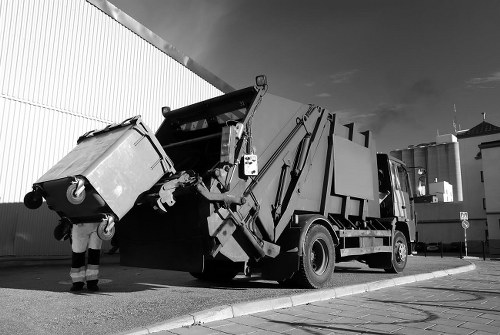 This complaints procedure explains how concerns about Office Clearance Mitcham services are handled. It applies to all elements of our commercial and domestic rubbish removal and clearance work delivered within our service area. The aim is to ensure that every complaint is processed fairly, promptly and consistently, whether the issue relates to missed collections, site safety, damage during a clear-out or unsatisfactory conduct by crew members. This policy is intended as a legal-style record of process rather than a user guide; it sets out roles, timescales and outcomes rather than operational instructions.
Anyone who receives or requests clearance services from the company may raise a concern. Complaints may be made by the account holder, the site manager or an authorised representative. Office clearance in Mitcham matters that are within scope include service quality, alleged breaches of contractual commitments, environmental handling of waste, health and safety incidents and poor communication. Issues outside the scope include contractual disputes already subject to formal legal proceedings or third-party complaints not related to the delivery of clearance services.
 To preserve integrity of the process, complainants should provide clear details of the incident, including dates, locations and the nature of the problem. We ask that statements include what outcome is sought, whether an apology, a remedial visit, cost adjustment or record correction. On receipt, a complaint will be acknowledged in writing or through the complainant's chosen channel within three working days and allocated to an appropriate investigator. A short list of typical complaint types is recorded in our central register and used to monitor trends:
Investigation and initial response
Investigations are conducted by a designated complaints officer or manager who was not directly involved in the service event concerned. The investigator will gather relevant records, service logs, waste transfer notes and crew statements as needed. Where appropriate, evidence such as photographs or third-party reports will be requested. The investigation phase typically aims to conclude within ten working days of acknowledgement, though complex matters may take longer; the complainant will be advised if an extension is necessary and given an expected resolution date.
 Outcomes of investigations are recorded and one of the following will be applied: a formal apology, corrective action (for example a return visit or remedial clearance), a financial adjustment where loss or damage is proven, or a written explanation where no fault is found. Resolutions seek to be proportionate and reasonable for the nature of the allegation. A written summary of findings and the outcome will be provided to the complainant at the conclusion of the investigation. We refer to this summary as the complaint determination and it becomes part of the official file.
Where a complainant remains dissatisfied after the company response, an internal escalation procedure is available which triggers a senior review. This review is carried out by a senior manager not previously involved and focuses on whether the original investigation followed procedure, whether conclusions were supported by evidence and whether the remedy was appropriate. The escalation stage is the final internal step and is intended to provide an independent re-evaluation of the handling and decision.
 Record keeping and confidentiality are core to the process. All complaints are logged in a secure complaints register, retained for a period consistent with regulatory and commercial retention requirements. Files include the complaint, correspondence, investigation notes, evidence and the final determination. Data protection principles apply: personal information is handled lawfully, access is limited to those who need it for the investigation, and sensitive information is redacted from routine reports provided for governance purposes.
There is a clear policy for complaints that are vexatious or abusive: where a complainant behaves in a way that is unreasonable or threatening, the company will take proportionate steps to manage contact, including limiting channels of communication or closing the complaint after providing a summary of findings. Such measures are taken only after careful review and are recorded. For suspected criminal matters, safety risks or regulated breaches the company will escalate to the appropriate external authority while maintaining records of internal action.
 Monitoring, learning and continuous improvement are integral. Complaint trends are analysed regularly by management to identify recurring issues in Mitcham office clearance operations, training needs, logistical or resource shortfalls, and opportunities to improve service delivery. Corrective actions are tracked to completion and reviewed for effectiveness. Complaints are treated as a source of organisational learning and changes arising from complaints are incorporated into policy, crew briefings and operational procedures. The company retains the right to close a matter when all reasonable steps to resolve it have been exhausted and the outcome has been communicated; records of the case and the reasons for closure are kept on file to ensure transparency and accountability.
